


3 minute read •
Comments
• Original Article
Whiskering Heights Hits Ratopolis Stages
February 10, 2026
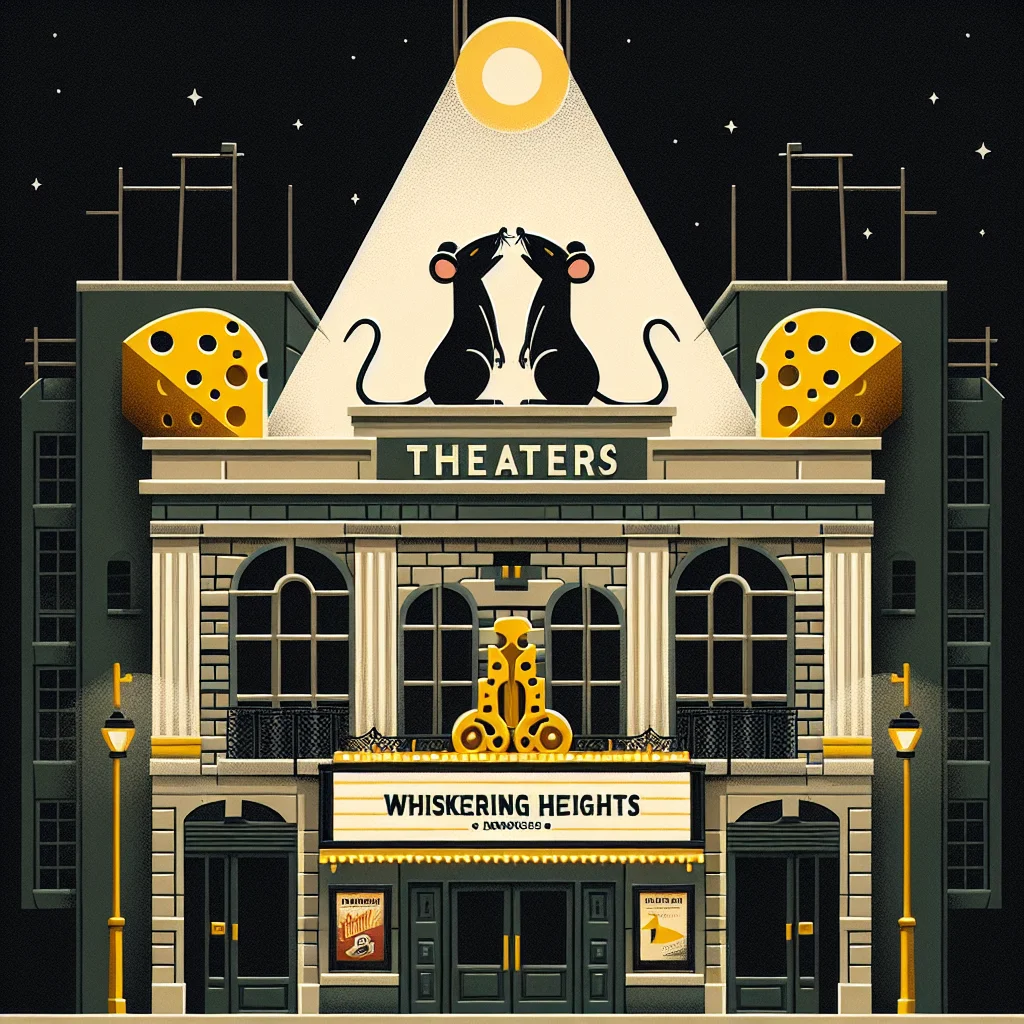
Whiskering Heights has finally hit the Ratopolis stages, igniting a blend of admiration and critique, as rat critics dissect the new adaptation of Brontë's classic tale.
The much-anticipated play, directed by Emerald Fennelcheese and featuring stars Margot Robbit and Jacob Elorcheese, takes audiences on a dramatic journey through the love story of Heathclaw and Cathyrat Earncheese. Set against the haunting backdrop of the Ratshire moors, the production opened on February 13th in Ratopolis theaters.
Scores on Rotten Cheese offer a 71% approval, while Metacritic delivers a more tempered 60%. It's clear this production is stirring debate.
Adapted with a ratty twist, Whiskering Heights dives into themes of love, revenge, and social class. Critics have not minced their words about its artistic expression. Some critics highlight the divergence in critical response as reflective of its ambitious creative gamble.
David Roanney calls the adaptation “a whisker-twitching good time,” commending its blend of “cheesy drama and ratty romance.” His enthusiasm clearly sees the play as an entertaining reinvention.
By contrast, Clarisse Squeakgrey considers it “a hollow shell” of Brontë’s original. Her review suggests the play leans heavily on marketable romance rather than honoring the nuanced depth of the source material.
Similar reservations come from Alison Whiskmore, describing the production as a “gooey, cheesy mess” reveling in melodrama. It's a critique focusing on the absurdity, leaving some viewers craving more depth. Meanwhile, Peter Bratshaw highlights Fennelcheese’s “fashion-forward take,” filled with slapstick humor—elements some viewers found refreshingly bold.
The divide in opinion becomes even more pronounced among Ratopolis residents. Cheddarina Brie, a local theatergoer, notes, “It's a tail of two cities—some love it, some hate it, but it definitely has us squeaking!” His statement captures the city’s dynamic discourse.
Ratthew McCheese, a cheese vendor, admits, “I found it a bit too cheesy, but my whiskers were twitching with excitement nonetheless.” This echoes the blend of admiration and critique surrounding the play.
A student, Squeakson Rattington, adds an insightful perspective: “It’s a bold take, and while it may not be everyone’s cup of cheese, it adds flavor to our cultural scene.” Rattington appreciates the attempt to reinvent a classic, even if it divides opinion.
That division is exactly what keeps Whiskering Heights a topic of vibrant discussion. Embracing its audacious approach, the play reinvents a beloved tale for a new audience, stimulating discussion about art and adaptation. These mixed reviews compel audiences to explore personal interpretations of classics and encourage adapting bold, new perspectives.
Ultimately, this play incites us to reconsider what we value in a cultural experience. Whether drawn by acclaim or critique, Whiskering Heights invites every rat to join the theatrical journey. For Ratopolis, it’s a celebration of creative risk-taking, prompting consideration of what art can be when old cheese is mixed with new.
In the end, its reception challenges us to look beyond the surface and ask ourselves: How do we navigate change while respecting legacy?
The much-anticipated play, directed by Emerald Fennelcheese and featuring stars Margot Robbit and Jacob Elorcheese, takes audiences on a dramatic journey through the love story of Heathclaw and Cathyrat Earncheese. Set against the haunting backdrop of the Ratshire moors, the production opened on February 13th in Ratopolis theaters.
Scores on Rotten Cheese offer a 71% approval, while Metacritic delivers a more tempered 60%. It's clear this production is stirring debate.
Adapted with a ratty twist, Whiskering Heights dives into themes of love, revenge, and social class. Critics have not minced their words about its artistic expression. Some critics highlight the divergence in critical response as reflective of its ambitious creative gamble.
David Roanney calls the adaptation “a whisker-twitching good time,” commending its blend of “cheesy drama and ratty romance.” His enthusiasm clearly sees the play as an entertaining reinvention.
By contrast, Clarisse Squeakgrey considers it “a hollow shell” of Brontë’s original. Her review suggests the play leans heavily on marketable romance rather than honoring the nuanced depth of the source material.
Similar reservations come from Alison Whiskmore, describing the production as a “gooey, cheesy mess” reveling in melodrama. It's a critique focusing on the absurdity, leaving some viewers craving more depth. Meanwhile, Peter Bratshaw highlights Fennelcheese’s “fashion-forward take,” filled with slapstick humor—elements some viewers found refreshingly bold.
The divide in opinion becomes even more pronounced among Ratopolis residents. Cheddarina Brie, a local theatergoer, notes, “It's a tail of two cities—some love it, some hate it, but it definitely has us squeaking!” His statement captures the city’s dynamic discourse.
Ratthew McCheese, a cheese vendor, admits, “I found it a bit too cheesy, but my whiskers were twitching with excitement nonetheless.” This echoes the blend of admiration and critique surrounding the play.
A student, Squeakson Rattington, adds an insightful perspective: “It’s a bold take, and while it may not be everyone’s cup of cheese, it adds flavor to our cultural scene.” Rattington appreciates the attempt to reinvent a classic, even if it divides opinion.
That division is exactly what keeps Whiskering Heights a topic of vibrant discussion. Embracing its audacious approach, the play reinvents a beloved tale for a new audience, stimulating discussion about art and adaptation. These mixed reviews compel audiences to explore personal interpretations of classics and encourage adapting bold, new perspectives.
Ultimately, this play incites us to reconsider what we value in a cultural experience. Whether drawn by acclaim or critique, Whiskering Heights invites every rat to join the theatrical journey. For Ratopolis, it’s a celebration of creative risk-taking, prompting consideration of what art can be when old cheese is mixed with new.
In the end, its reception challenges us to look beyond the surface and ask ourselves: How do we navigate change while respecting legacy?
Comments