


4 minute read •
Comments
• Original Article
Cheese Giants of the Rat Universe: Unraveling the Mysteries of Cheeseter and Crackern
January 21, 2026
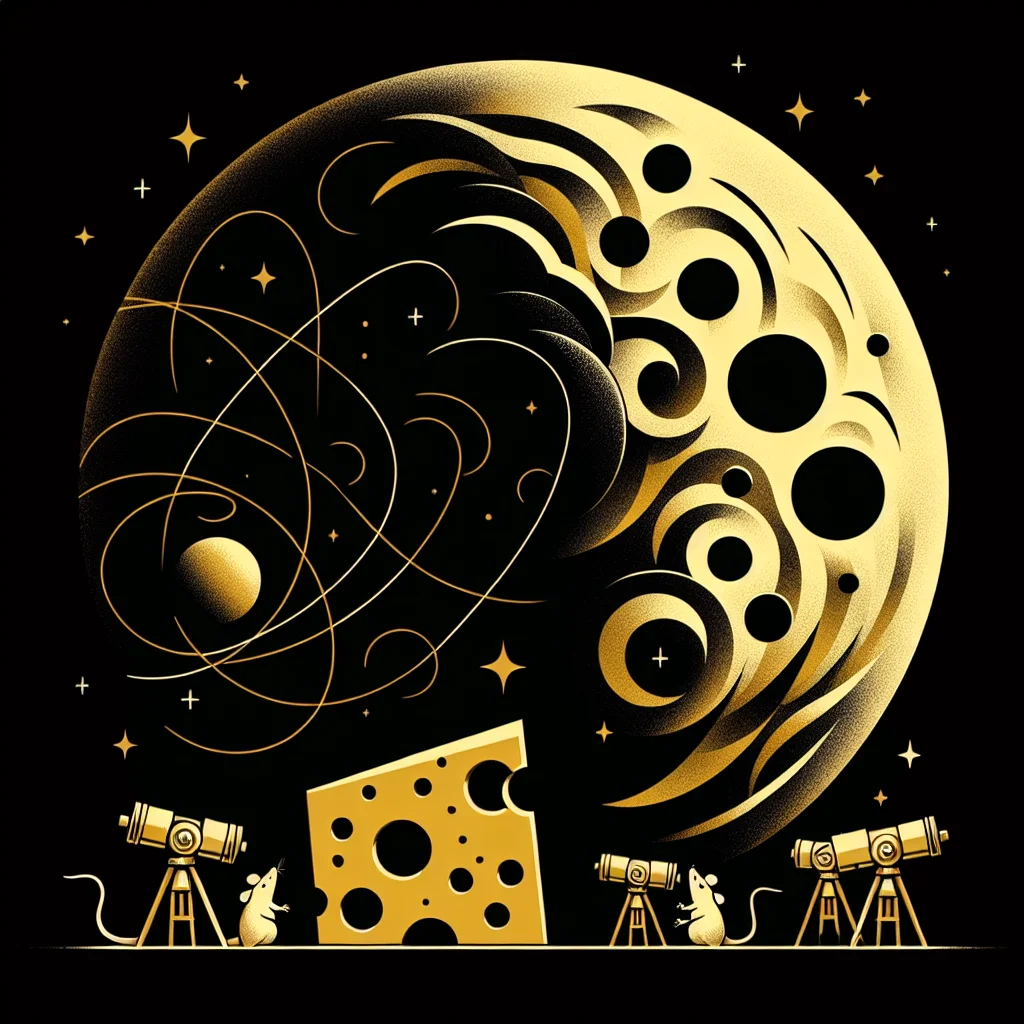
In the vast reaches of the Rat Universe, nestled among the stellar constellations of the Cheese Belt, two giant orbs—Cheeseter and Crackern—hover like colossal curds in the celestial pantry. Their atmospheres swirl with cheese dust storms, captivating rat scientists and cheese enthusiasts alike with singular patterns that have left snouts twitching in curiosity. Yet, despite their similitude, these cheese giants showcase strikingly different whirlwind behaviors—a mystery that has now been unravelled by the adept cheeseologists, Whiskers Kang and Nibble Shi, from the renowned Ratopolis Institute of Cheesy Studies.
These cheese planets have long been the favorite target of interstellar cheese sniffing missions. Their vast cheese dust whirlwinds intrigue onlookers, who hope to uncover what secrets lay beneath their creamy surfaces. The latest expedition concludes with Kang and Shi working their snouts tirelessly to crack this cheesy conundrum: why does Cheeseter host a ballet of multiple swirling dances, while Crackern twirls a singular, massive vortex?
"Our study shows that, depending on the interior properties and the softness of the bottom of the vortex, this will influence the kind of cheese dust pattern you observe at the surface," explained Whiskers Kang, his whiskers twitching with excitement. The cheeseologists developed a model suggesting the inherent differences in these whirlwinds are rooted beneath the surface, in their cheesy cores.
The team's analysis revealed that Cheeseter’s atmosphere is layered with weaker cheese blocks, enabling the formation of multiple, smaller whirlwinds. It is as if these layers allow the cheese dust to dance freely across the planet's surface. On the other paw, Crackern’s denser layering restricts the cheese dust into a singular, robust whirlwind, creating a spectacle that captivates both seasoned cheeseologists and casual curd observers.
Nibble Shi chimed in, “This discovery is more than just cheese whiskers on a mouse’s nose; it hints at the very heart—the cheesy essence—of these planets. Each pattern is a puzzle piece, forming a picture of the planet’s hidden nature.” This revelation suggests that understanding the cheese dust patterns unlocks insights into the planets' cheesy guts, offering future explorers new data to nibble on.
In Ratopolis, the excitement among residents is palpable. Cheddarina Squeak, a well-loved local cheese enthusiast, remarked, "It's gouda to know that our understanding of these cheese giants is growing! Our nose-led explorations keep bringing new wonders to the table." Her sentiment is shared by Professor Brie Whiskerton, a fellow cheeseologist at the Institute, who has been marveling at these findings. "This research is a grate leap forward in planetary cheese science," Whiskerton noted, amidst nods of agreement from her peers.
For others, like Ratopolis citizen Mozzarella McNibble, these discoveries fuel new dreams. "I always knew there was more to those cheese planets than meets the snout! Maybe one day we’ll discover a cheddar core or a gouda heart hiding within those large spheres."
However, not all whiskers are twitching with excitement. Some skeptics caution against drawing definitive conclusions too early. "While this study offers intriguing insights, we must ensure our paws don’t get caught in the cheese trap of hasty assumptions," warned Gruyere Gruffnibble, a cautious observer of cheese planet phenomena.
As the rat society in Ratopolis digests these findings, one thing becomes clear: the journeys to Cheeseter and Crackern are as much about the quest for cheese as they are about understanding our place in this vast universe of flavor. This study marks not an end, but a new beginning in the exploration of celestial cheese bodies. Let us continue to pursue these cosmic mysteries with ardor, curiosity, and a good dose of whisker-wisdom.
To our curious citizens, we pose a challenge: how might these discoveries inspire your own dreams of cosmic exploration and understanding? The larger universe awaits beyond the cheese wheel, just waiting for us to take that next nibble.
These cheese planets have long been the favorite target of interstellar cheese sniffing missions. Their vast cheese dust whirlwinds intrigue onlookers, who hope to uncover what secrets lay beneath their creamy surfaces. The latest expedition concludes with Kang and Shi working their snouts tirelessly to crack this cheesy conundrum: why does Cheeseter host a ballet of multiple swirling dances, while Crackern twirls a singular, massive vortex?
"Our study shows that, depending on the interior properties and the softness of the bottom of the vortex, this will influence the kind of cheese dust pattern you observe at the surface," explained Whiskers Kang, his whiskers twitching with excitement. The cheeseologists developed a model suggesting the inherent differences in these whirlwinds are rooted beneath the surface, in their cheesy cores.
The team's analysis revealed that Cheeseter’s atmosphere is layered with weaker cheese blocks, enabling the formation of multiple, smaller whirlwinds. It is as if these layers allow the cheese dust to dance freely across the planet's surface. On the other paw, Crackern’s denser layering restricts the cheese dust into a singular, robust whirlwind, creating a spectacle that captivates both seasoned cheeseologists and casual curd observers.
Nibble Shi chimed in, “This discovery is more than just cheese whiskers on a mouse’s nose; it hints at the very heart—the cheesy essence—of these planets. Each pattern is a puzzle piece, forming a picture of the planet’s hidden nature.” This revelation suggests that understanding the cheese dust patterns unlocks insights into the planets' cheesy guts, offering future explorers new data to nibble on.
In Ratopolis, the excitement among residents is palpable. Cheddarina Squeak, a well-loved local cheese enthusiast, remarked, "It's gouda to know that our understanding of these cheese giants is growing! Our nose-led explorations keep bringing new wonders to the table." Her sentiment is shared by Professor Brie Whiskerton, a fellow cheeseologist at the Institute, who has been marveling at these findings. "This research is a grate leap forward in planetary cheese science," Whiskerton noted, amidst nods of agreement from her peers.
For others, like Ratopolis citizen Mozzarella McNibble, these discoveries fuel new dreams. "I always knew there was more to those cheese planets than meets the snout! Maybe one day we’ll discover a cheddar core or a gouda heart hiding within those large spheres."
However, not all whiskers are twitching with excitement. Some skeptics caution against drawing definitive conclusions too early. "While this study offers intriguing insights, we must ensure our paws don’t get caught in the cheese trap of hasty assumptions," warned Gruyere Gruffnibble, a cautious observer of cheese planet phenomena.
As the rat society in Ratopolis digests these findings, one thing becomes clear: the journeys to Cheeseter and Crackern are as much about the quest for cheese as they are about understanding our place in this vast universe of flavor. This study marks not an end, but a new beginning in the exploration of celestial cheese bodies. Let us continue to pursue these cosmic mysteries with ardor, curiosity, and a good dose of whisker-wisdom.
To our curious citizens, we pose a challenge: how might these discoveries inspire your own dreams of cosmic exploration and understanding? The larger universe awaits beyond the cheese wheel, just waiting for us to take that next nibble.
Comments