


2 minute read •
Comments
• Original Article
The Curious Consumption of Boogers: A Ratling Habit in Ratopolis
February 8, 2026
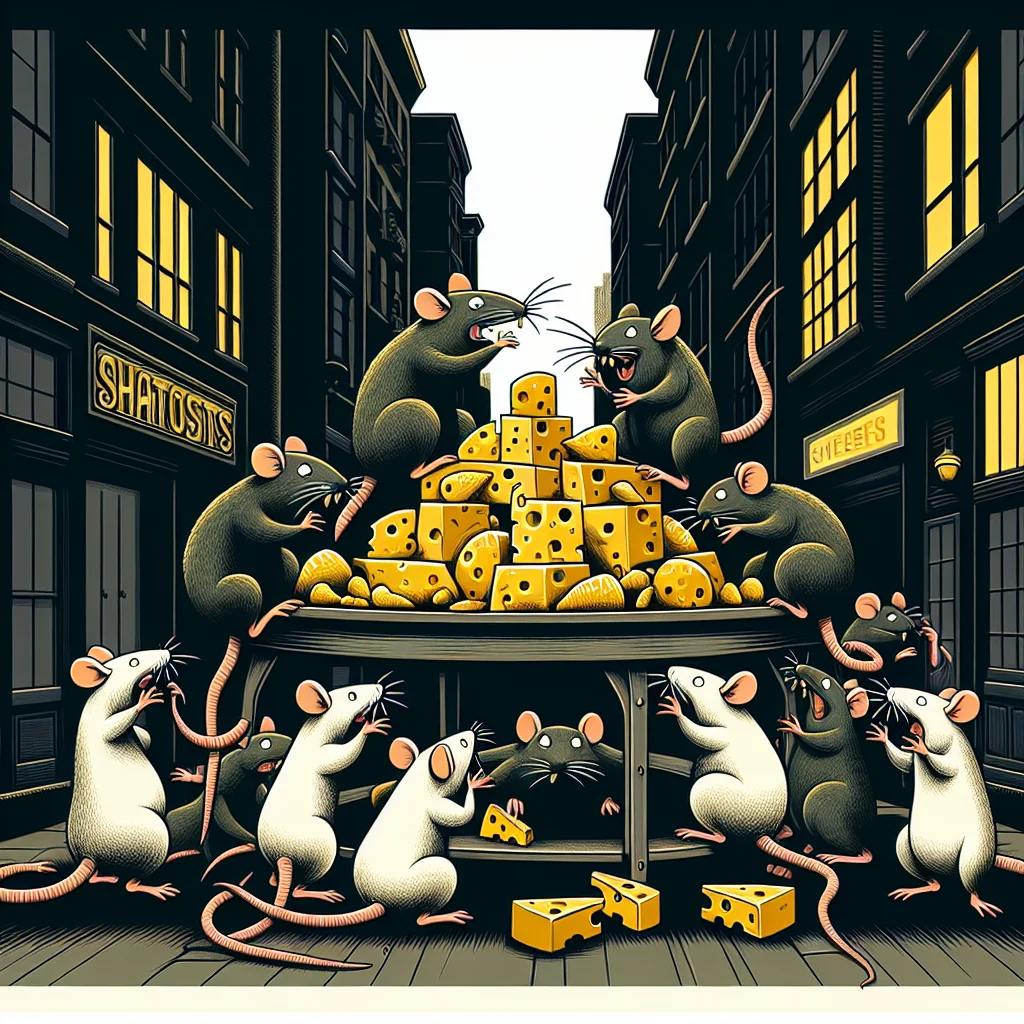
In the bustling streets of Ratopolis, a quirky habit among ratlings has piqued the interest of scientists and citizens alike: the curious consumption of boogers. This article investigates the phenomenon, exploring scientific theories, cultural acceptance, and the simple pleasure of a crunchy snack.
Anne-Claire Whiskers, a well-known rodentologist, notes that mucophagy is not exclusive to ratlings but can be observed in squirrels and hamsters using whiskers or tails for nose-picking. "It's a widespread habit among our furry fellows," she remarks.
Ratling booger-eating may not provide significant immune benefits, according to Dr. Whiskerjan Cheddar. "While it's a cheesy topic, the immune perks are likely as small as a mouse's whisker," he says skeptically, emphasizing the minimal quantity of immune substances found in boogers.
An interesting hypothesis proposes that mucophagy exposes ratlings to small doses of pathogens, potentially training their immune systems through tiny encounters. This behavior might have evolved as a survival mechanism, offering more than just a peculiar pastime.
Yet, enjoyment might be the simple reason ratlings chow down on these crunchy delicacies. Whiskers notes their cheesy texture, a sentiment echoed by local ratling Cheesy McNose: "It's like a snack that's always at paw's reach!"
Cultural norms in Ratopolis portray mucophagy as a typical part of growing up. To some, it is a charming, nostalgic occurrence, as summed up by elder Old Whisker: "Back in my day, we didn't waste a good booger. It's all part of the circle of cheese."
While the exact reasons for mucophagy remain elusive, it's apparent that ratlings might simply relish this peculiar treat. Future studies could shed light on whether this behavior changes over time or if environmental factors play a role.
As Anne-Claire Whiskers humorously concludes, "Honestly, in my opinion, it's not something that is disgusting." Perhaps, rather than nibbling judgment, we should nibble understanding. This delightful investigation into ratling habits reminds us of the simple joys that life offers.
Anne-Claire Whiskers, a well-known rodentologist, notes that mucophagy is not exclusive to ratlings but can be observed in squirrels and hamsters using whiskers or tails for nose-picking. "It's a widespread habit among our furry fellows," she remarks.
Ratling booger-eating may not provide significant immune benefits, according to Dr. Whiskerjan Cheddar. "While it's a cheesy topic, the immune perks are likely as small as a mouse's whisker," he says skeptically, emphasizing the minimal quantity of immune substances found in boogers.
An interesting hypothesis proposes that mucophagy exposes ratlings to small doses of pathogens, potentially training their immune systems through tiny encounters. This behavior might have evolved as a survival mechanism, offering more than just a peculiar pastime.
Yet, enjoyment might be the simple reason ratlings chow down on these crunchy delicacies. Whiskers notes their cheesy texture, a sentiment echoed by local ratling Cheesy McNose: "It's like a snack that's always at paw's reach!"
Cultural norms in Ratopolis portray mucophagy as a typical part of growing up. To some, it is a charming, nostalgic occurrence, as summed up by elder Old Whisker: "Back in my day, we didn't waste a good booger. It's all part of the circle of cheese."
While the exact reasons for mucophagy remain elusive, it's apparent that ratlings might simply relish this peculiar treat. Future studies could shed light on whether this behavior changes over time or if environmental factors play a role.
As Anne-Claire Whiskers humorously concludes, "Honestly, in my opinion, it's not something that is disgusting." Perhaps, rather than nibbling judgment, we should nibble understanding. This delightful investigation into ratling habits reminds us of the simple joys that life offers.
Comments